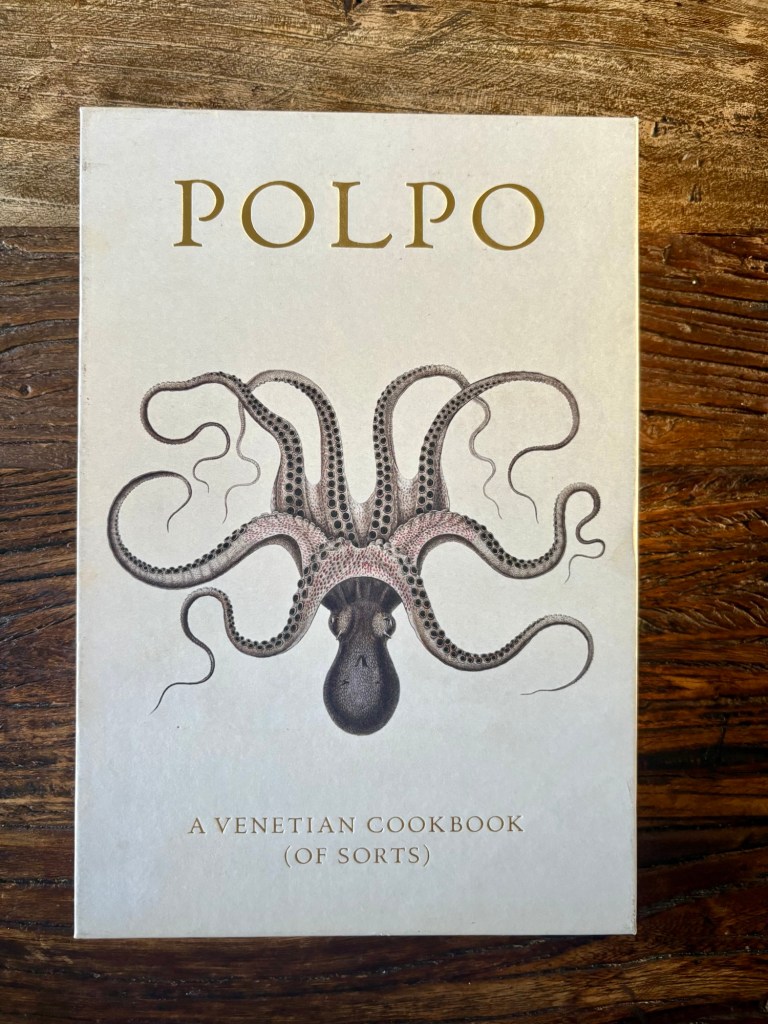
From the Shelf: Polpo by Russell Norman – Lamb Chump with Caponata

Venice isn’t just Harry’s Bar. The real spirit lives in the backstreets, in the bàcari where cicchetti (Venetian tapas) line the counters — simple, sharp, stripped-back flavours.

Russell Norman captured that in Polpo (published by Bloomsbury, 2012), a cookbook that reads like a love letter to the lagoon. The recipes? No fuss. Four or five ingredients, maybe less. All about what you can take away and still hold the essence.

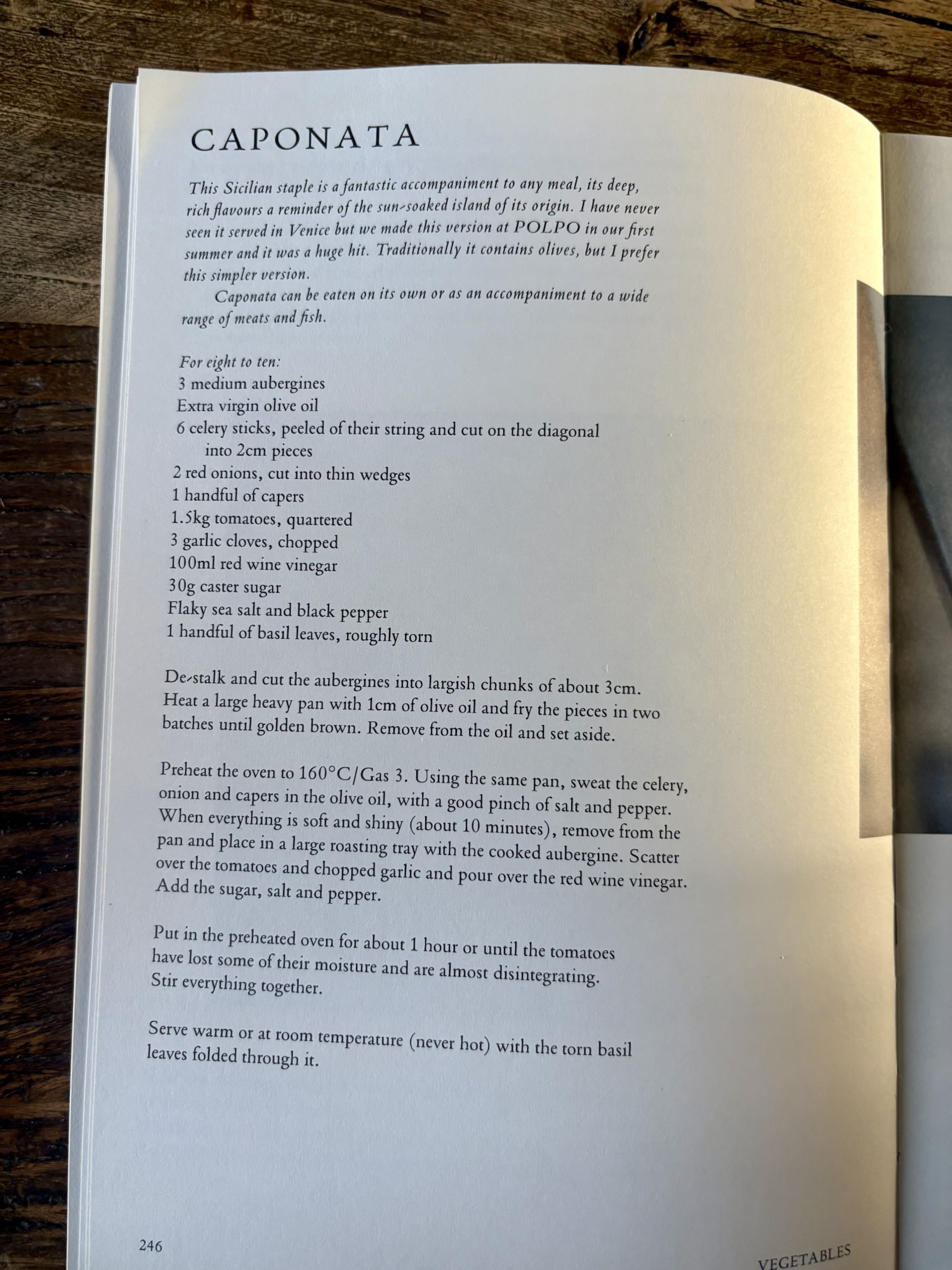
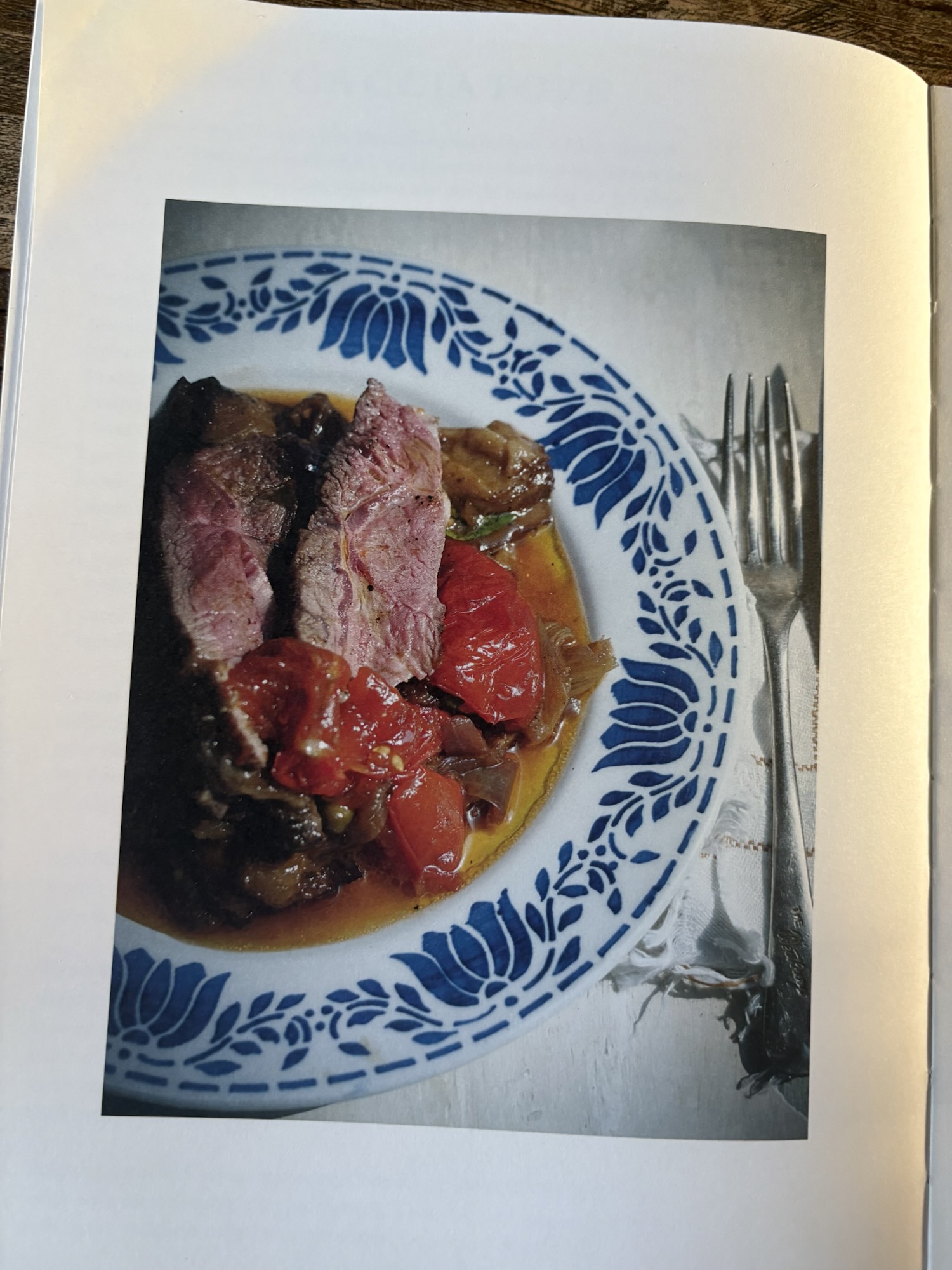
The standout this week: Lamb chump with caponata (page reference varies). Caponata — that sweet-sour Sicilian vegetable mix — is a dish that moves around the plate. Pair it with lamb, with fish, with cheese. At Mezzo on Waldorf Street, the first restaurant I worked in, we ran our own version with goat’s cheese. Clean plates, every time.

This book earns its place on the shelf. And that dish still earns its place on the table.
Venice isn’t just Harry’s Bar. The real spirit lives in the backstreets, in the bàcari where cicchetti (Venetian tapas) line the counters — simple, sharp, stripped-back flavours.

Russell Norman captured that in Polpo (published by Bloomsbury, 2012), a cookbook that reads like a love letter to the lagoon. The recipes? No fuss. Four or five ingredients, maybe less. All about what you can take away and still hold the essence.

The standout this week: Lamb chump with caponata (page reference varies). Caponata — that sweet-sour Sicilian vegetable mix — is a dish that moves around the plate. Pair it with lamb, with fish, with cheese. At Mezzo on Waldorf Street, the first restaurant I worked in, we ran our own version with goat’s cheese. Clean plates, every time.

This book earns its place on the shelf. And that dish still earns its place on the table.

From the Shelf: In Search of Perfection by Heston Blumenthal

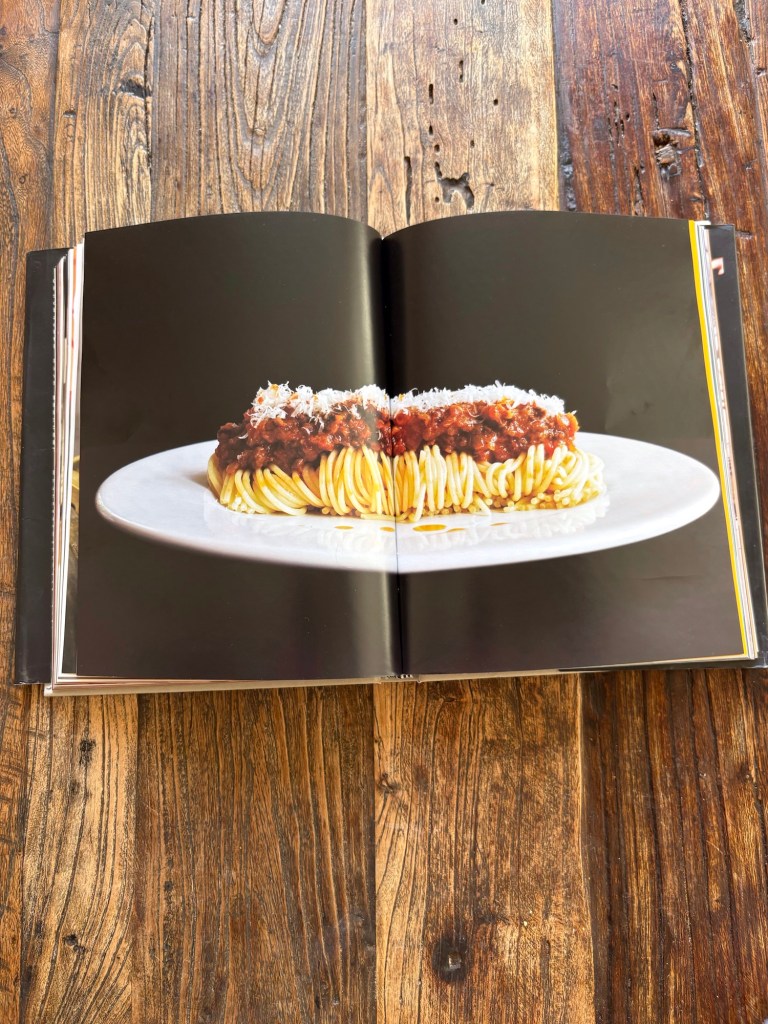
Heston Blumenthal’s In Search of Perfection (Bloomsbury) dives into eight recipes rebuilt from the ground up. From the truth behind spaghetti bolognese to a simple star anise trick with onions — it’s obsession on a plate.

Why This Book Still Matters

This week’s book I’ve pulled down from the shelf is In Search of Perfection by Heston Blumenthal, published by Bloomsbury.

This one isn’t a “stick it on the shelf and forget it” kind of book. It’s a solid dive. Eight recipes in total — but when I say recipes, don’t think quick dinners. Each one is pulled apart until you see how far you can push a dish. History, culture, memory, method. Nothing left untouched.

That’s what makes it special: the way Heston dissects food, showing you that what we take for granted on the plate has a whole story and a thousand details behind it.


Spaghetti Bolognese — Or Is It?

The recipe that’s always stuck with me is what we like to call spaghetti bolognese.

Except here’s the kicker: bolognese as a sauce doesn’t even exist. It’s another one of those made-up British names that took root. Go to Bologna, and you’ll find ragù — slow, rich, deep — and it’s nothing like the stuff we grew up calling “spag bol.”

“Bolognese as a sauce doesn’t even exist. What you find in Bologna is ragù — and it’s a whole different approach.”

Heston does what he does best: pulls it apart, layer by layer. He rebuilds the dish from the ground up, chasing depth of flavour, looking at technique, even questioning the ingredients we think belong there.

It’s not about speed. It’s not about convenience. It’s about obsession. A chef refusing to accept the default version of anything.


Chef’s Tip from the Book

💡 Sweat onions with a whole star anise.
It gives a richer, meatier umami hit. Works in any onion dish — a small move that changes everything.


What It Teaches You

That’s why this book has never left my shelf.

Every dish inside is a lesson: how to push further, how to respect detail, how to never stop asking “what if?” Eight recipes, yes — but each one is a masterclass in going beyond the ordinary.

Pick it up, and you’ll never look at something as simple as shepherd’s pie, roast chicken, or bolognese the same way again.

From the Shelf: For the Love of Food by Dennis Cotter

A curveball this week: Dennis Cotter’s For the Love of Food. Pure vegetarian cooking that makes you forget there’s no meat or fish — standout recipe: maple chilli roasted beetroot with glazed pecans.

From the Shelf: For the Love of Food by Dennis Cotter

This week’s pick is a curveball. A book that feels different the moment you read it. You get halfway through before you realise — there’s no meat, no fish, nothing. It’s vegetarian from start to finish. And you don’t miss it for a second.

The book is For the Love of Food by Dennis Cotter. For three decades he ran Paradiso in Cork, long before vegetarian cooking was fashionable. The Guardian once called him the best vegetarian chef in the British Isles. Back when I started cooking, the “veg option” on most menus was a tomato tart or a mushroom risotto. Some restaurants still haven’t moved past that. Dennis went further. He made vegetables worth the main stage.

This book’s also personal to me. The food styling was done by an old friend and colleague, chef Fergal Conolly. Respect, brother. That makes this one extra special.

The Standout Recipe

The dish that grabs me here: maple chilli roasted beetroot with glazed pecans, wild rice, butter greens and orange yoghurt. Sweetness, spice, crunch, freshness — everything working in balance.

It’s straightforward to make. Roast the beets with maple and chilli, glaze the pecans, cook the rice, stir through greens, and bring it all together with a sharp orange yoghurt. Some parts can be prepped in advance, then finished when you’re ready to serve. It’s the kind of dish you can put in the middle of the table and everyone — kids, family, guests — will dig in.

Why It Earns Shelf Space

Vegetables here aren’t an afterthought. They’re treated with the same respect as any cut of meat or fish. That’s the point. Cotter shows just how much can be done when you let produce lead the way. That’s why this book stays on my shelf.

Save it. Cook it. Pass it on.

Links: Paradiso Restaurant · Dennis Cotter in The Guardian · About Royal Nyborg Smokehouse

From the Shelf: Arabesque by Claudia Roden — Roast Shoulder of Lamb with Couscous & Date Stuffing

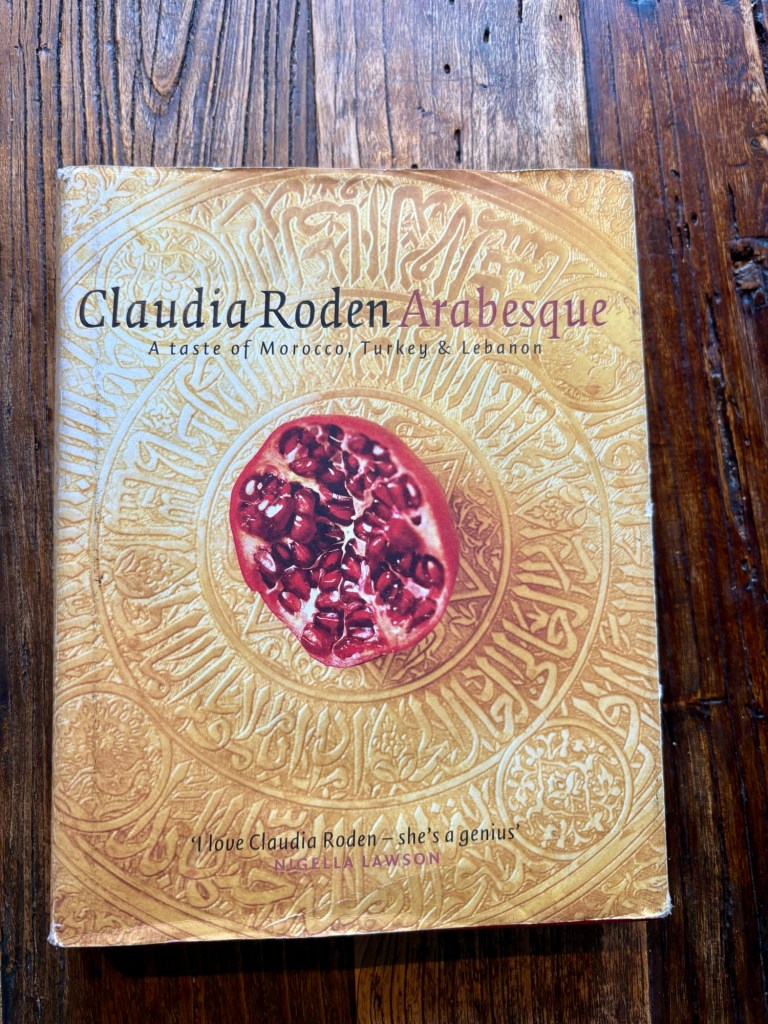
Claudia Roden’s Arabesque (2005) is more than a cookbook — a journey through Turkey, Lebanon, and Morocco. Standout dish: Roast Shoulder of Lamb with Couscous & Date Stuffing.

Claudia Roden was born in Cairo, raised in London, and first published back in 1968. She studied art, but it was food that became her true canvas.

Her Arabesque (2005) is a journey through Turkey, Lebanon, and Morocco. Open its pages and you’re in the market streets — colours, smells, spices, and noise, all packed into recipes that speak of culture and history.

One dish that stands tall:

Roast Shoulder of Lamb with Couscous and Date Stuffing.
Slow-roasted lamb, couscous, sweet dates tucked inside. It’s generous. It’s layered. It feels like Middle Eastern hospitality at your own table.

But Arabesque isn’t just about cooking. It’s about memory, identity, and the way food connects people. Roden captured that — and it’s why this book still belongs on the shelf.

At Royal Nyborg Smokehouse, I believe the same: food is more than flavour. It’s craft, patience, and story — carried through generations.


From the Shelf: River Cottage MEAT


From the Shelf: Sugar Club , Peter Gordon

Cookbooks come and go, but some are still banging years later. The Sugar Club by Peter Gordon is one of them — first published in 1997 and still standing tall. Layout, photos, recipes… all on point. And tucked inside is the absolute classic: Watermelon & Feta Salad. Still used today, still in Ottolenghi’s repertoire, and still on menus around the world. It’s as relevant now as the day it hit the page

About the Book

Peter Gordon’s The Sugar Club is a real one. It’s not just a nostalgia piece — the recipes hold up, the photography is timeless, and the whole thing feels like it could have been printed yesterday. This one’s been on my shelf for decades, signed by the man himself after we cooked together at the Tresanton Hotel in St Mawes, Cornwall. That signature makes it special… even if I’ve never cooked a recipe from this or any of the other 700 books I own.

Recipe – Watermelon & Feta
Fresh, simple, and perfect for this time of year. Late summer means watermelons are in peak nick — sweet, juicy, and ready to steal the show. This recipe balances that sweetness with salty feta and fresh herbs. Add a little grilled chicken or — better yet — some of my land-based cold-smoked salmon, and you’ve got a plate that’ll turn heads.


My Salmon Pairing

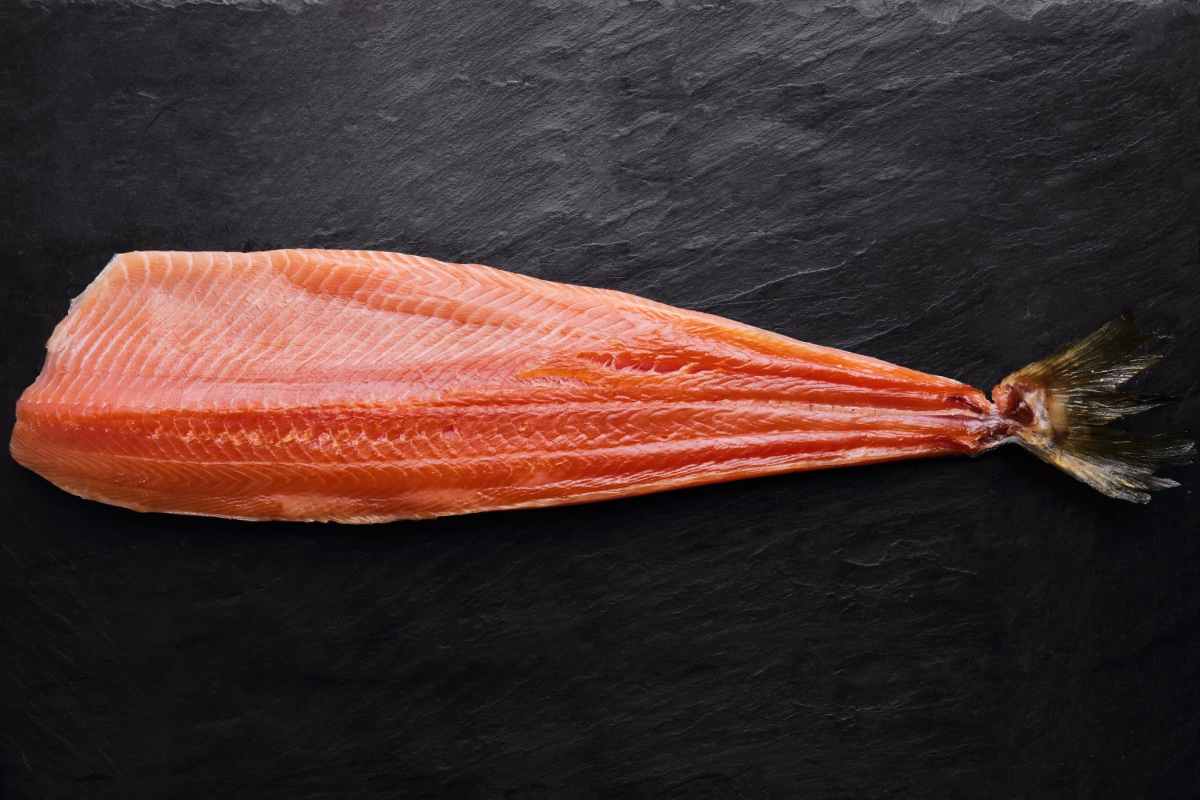
I’m not putting up a direct “copy” of Peter’s dish — he’s already nailed it. But here’s how I’d pair it: thick slices of my 7-day dry-aged, cold-smoked Danish salmon alongside that watermelon & feta. The salt from the salmon, the sweetness from the melon, and the tang from the feta… it’s a summer plate worth repeating.
(Insert photo of salmon + watermelon – Alt text: “Royal Nyborg Smokehouse salmon with watermelon & feta salad”)

My Take
Some recipes are trends; this one’s a keeper. I’ve seen it on menus from London to Auckland and it always works. It’s in that rare group of dishes that don’t age out. And the book? If you see a copy, grab it. Then stick it on the shelf — or better yet, cook from it.

Try It Yourself
Get yourself a ripe watermelon, some crumbly feta, and a fillet of my dry-aged salmon. Plate it up, pour something cold, and thank me later.
Follow the Fish

Follow the Fish
Want more chef picks, behind-the-scenes smokehouse shots, and recipes that actually work?
👉 Follow me on Instagram — and follow the fish.


Salmon Swim Upstream

The smokehouse was painted, the fridges installed, the food authority approved us. Then Denmark ran out of land-based salmon.

So close and yet so far. We were certainly feeling like a salmon swimming upstream. There we were, fridges installed, smokehouse painted, food authority inspected and approved with flying colours. Yes, folks, ready to launch! The excitement was palpable. So how come the ovens stood empty and the fridges idle? Because due to an expansion project there could be no Danish land-based salmon to speak of. Of course, there could be salmon from Norway or Iceland but Royal Nyborg Smokehouse is passionate about using sustainable salmon that is raised in the aquaculture pools of Denmark’s land-based farm. Simple as that. https://danishsalmon.dk/ And you’ve got to have the courage of your convictions – even if that means a three-month delay and idle hands. As The Script sang in our old VW with a single disc player over and over again on a fabulous trip around France when the kids were small, ‘you’ve got to stand for something or you’ll fall for anything…‘. You can listen to that if you like: https://www.youtube.com/watch?v=uoKqTip1Cxs

Idle Hands?

OK. So idle hands is not exactly accurate. Johnny Boy had been busy implementing his own expansion of sorts. No, not his belly (there is a new health kick going on Chez Taylor) but rather at the smokehouse. Unqualified and equally unfazed John set about galvanizing the youth (Nyah) and building his very own smoking oven. I kid you not. Lines were drawn, bricks bought, and glue mixed. (Whatever happened to concrete?) Anyway, the outer wall was built and the tiling underway. Not long and Micheal Caine might well have disapproved when they put the bloody doors on. https://www.youtube.com/watch?v=8g_GeQR8fJo. (The Italian Job, 1969, if you were wondering).

Evidence that summer holidays (and family businesses) are a wealth of alternative learning opportunities!

Extra-curricular activities

Of course, all work and no play would John a dull boy so the autumn saw him delving into the deep with a book well worth reading:

The End of the Line – How overfishing is changing the world and what we eat‘ by Charles Clover. According to John, if you have seen or heard of Seaspiracy on Netflix then this is the book to read. It is a fantastic book packed full of astounding facts and information about the state of the fishing industry today. More than that, it could and should change behaviours.

As Charles Clover says:

The whole food industry – the sellers, the buyers in supermarkets and processing firms as well as the fishermen – bears responsibility for what has been going on in the sea whether or not they are aware of it. Given the scale of illegal catches, it is virtually impossible for anyone to put their hand on their heart and say they have not, inadvertently, bought sold, or eaten, illegally caught fish. No one can back away from that, not the humblest fish and chip shop nor the most famous restaurant in the land‘. (Pg 155, Ch 10 The Slime Trail, Ebury Press.)

You can find it here: https://www.bookdepository.com/End-Line-Charles-Clover/9780091897819?ref=grid-view&qid=1627576491112&sr=1-1

And I suppose that takes us back to where we started – you’ve got to stand for something or you’ll fall for anything! Roll on Danish land-based farmed salmon and the ethical alternative it offers. We are pleased to finally be receiving you. Royal Nyborg Smokehouse (and its new cold-smoking ovens!!) is finally underway and a taste sensation is awaiting!

See you soon 🙂